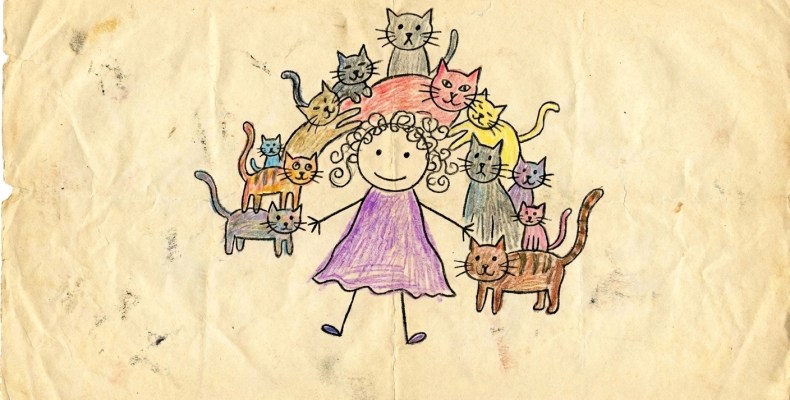
Are you a cat lover? If so, when you read this, I can imagine you smiling, thinking about one of your naughty cats.
When I was young, my mum gave away one of my cats for adoption. One of my sisters told me that the cat’s adoptive parents were poor. I cried, imagining my cat living in poor conditions without its beloved chicken curry. You might be laughing out loud reading this, thinking about how dramatic I must have been and wondering how my parents managed to deal with me when I was young. When having dinner with chicken curry, I would intentionally drop a piece of chicken and give it to my cat. Growing up, we were only allowed a maximum of three pieces of chicken each during meals. My parents were like mathematicians, dividing everything with precision.
Can you imagine growing up with Asian parents, where disciplining children with beatings was considered tradition, the concept of child rights almost nonexistent? I often found myself in situations having to ‘talk back’ to my parents, trying to educate them about the needs of our cats.
Have you ever stood up for something you believed in, even against someone you were afraid of? I did. I risked my own peace to fight for my cats’ rights—to ensure they could enjoy proper meals like chicken curry. Yes, I was willing to stand up, even if it meant defying my parents, all for the sake of my cats.
I have six siblings and am the second youngest daughter in my family. You cannot even imagine how noisy our house was! We came from a farming background, so allmy siblings had their favorite animals. When we were young, we raised birds, white rats, dogs, cats, chickens and ducks. Our house was like a mini-zoo and my parents were like zookeepers—they had to take care of us and all our animals.
I loved almost all of the animals, not including mosquitoes, but I am a 100% cat person. My cats loved to sleep on my chest. When I was in Grade 7, one of my favorite cats, Mi Nyo (‘Brown’ in Burmese), died after being attacked by stray dogs. Losing my cat broke my heart and for a long time after, I wasn’t able to raise another cat. I felt like no other cat could replace her. It was as if I had closed my heart to cats forever.
In 2019, while I was working as a program officer for an international non-governmental organization (INGO) in Yangon, Myanmar, my parents adopted two cats. The female cat was named A Phyuu Ma (‘Big Eyes’ in Burmese) and the male cat was called Hmone Gyi (‘Grumpy Face’ in Burmese). Hmone Gyi was one of the naughtiest cats I have ever encountered; he loved playing tricks on us, adored my mum and my nephew, Sai and listened to them—but not to me. However, he was an incredibly patient cat; he never fought with any of the other cats in the community. I’ve learned that cats often pretend not to understand us—they’re not clueless; they’re just choosing to ignore us.
During the COVID-19 pandemic, I returned home to work remotely and finally had the chance to spend time with my family and cats. However, my heart still felt closed to cats. When the COVID-19 situation was under control and election campaigns were underway, I returned to Yangon for work. That experience also distanced me from cats.
While working on election observations, I have vivid memories of the 2020 elections. Many people were voting while wearing masks. Tragically, the military junta overturned the election results and on February 1st 2021, military dictator Min Aung Hlaing staged a coup against the government led by Daw Aung San Suu Kyi, citing unfounded claims of voter fraud. The entire nation was plunged into grief, disbelief and anger. Prominent figures, including State Counselor Daw Aung San Suu Kyi, President U Win Myint and members of the National League for Democracy (NLD) were arrested and imprisoned. Soon after, the military began targeting and arresting anyone who opposed them, often carrying out these arrests under the cover of night. They then expanded their crackdown, arresting individuals who supported Civil Disobedience Movement (CDM) participants and other who joined People Defense Forces (PDF) or took part in demonstrations. These arrests were often conducted in broad daylight without legal warrants, further showcasing the regime’s blatant disregard for justice and human rights.
The coup sparked nationwide protests and demonstrations, with countless people joining the CDM and many young people joining the PDF to resist the military’s brutality, marking the beginning of the Spring Revolution. I firmly believe that this dictatorship must be the last for our generation. The political turmoil forced me to leave Yangon and return to my hometown and live with my parents. Out of concern for the safety of my loved ones, I won’t go into detail about my work role and involvement in the Spring Revolution to oppose the military junta.
During this challenging period, I found an opportunity to reconnect with my cats. This time of upheaval not only reshaped my life but also deepened my bond with the animals that shared our home. One day, my dad found another cat on his way back from my parents’ farm, hiding in a hole; I named her Mee Mee Lay (‘Little Daughter’ in Burmese). In my house, she only communicated with me; no one else was allowed to touch her. Sometimes, I jokingly called her the Snake Princess because she loved catching snakes and placing them on my bed or in front of me as gifts. Each time, these ‘lovely’ surprises almost separated my soul from my body!
In 2021, A Phyuu Ma gave birth to two adorable kittens: Thar Thar Lay (‘Little Son’ in Burmese) and Shwe Wah (‘Yellow’ in Burmese), who sadly passed away after being attacked by stray dogs. Thar Thar Lay was a big eater with an insatiable love for chicken; once, while enjoying a chicken barbecue, he reached into my mouth to grab a piece of chicken. I can still remember the odd sensation of his soft fur in my mouth. Although his paws were always dirty from running around, I now miss that moment and if he would do it again, I would cherish it.
Among all the cats, Hmone Gyi stood out; he had a bad habit of peeing everywhere and would always wear his grumpiest face when scolded. Strangely, he seemed to understand when we talked about him. But if anyone spoke poorly of him, my mum would defend him fiercely and being the clever cat he was, he always tried to please her because he knew she was the queen of the house. I often joked that Hmone Gyi was smarter than me since I struggled to please my mum as effectively as he did! His body bore many scars from fights with a big and rather naughty neighbourhood cat; he had attempted to woo the naughty cat’s girlfriend, leading to several battles. Hmone Gyi never gave up on his quest to have a girlfriend. During social gatherings, we often talked about our favorite cats, sharing stories of their behavior and how clever they were.
On 1 August, 2021, my husband tested positive for COVID-19 and soon after, my family members left me, my husband and four cats to go to their farm. This gave me the opportunity to bond with the cats and my heart started to melt for Mee Mee Lay and Thar Thar Lay, who were still very young at the time. They would sleep on my chest and I cherished the quiet moments with them. I made sure to keep them safe from street dogs and the troublesome ugly naughty cat that often caused trouble.
Before long, I contracted COVID-19 as well. During my sickness, Thar Thar Lay and Mee Mee Lay stayed with me, comforting me as I rested. Sometimes, Mee Mee Lay would gently touch my finger while I was receiving treatment. After my family members returned home,
they too contracted COVID-19; my mother’s condition worsened and she had to use an oxygen tank. It was a difficult time for all of us, the combination of COVID-19 and the ongoing political crisis making everyday life incredibly challenging.
As if our lives weren’t challenging enough, on September 7th 2021, the National Unity Government (NUG) of Myanmar declared a ‘people’s defensive war’ against the military junta who had continued killing unarmed civilians including children and women. Like many of my friends, I wanted to join the fight against the military, but in the chaos and fear for life, my focus also remained on the well-being of my cats. I immediately told my niece and nephew to rush to local convenience stores in my hometown and buy as much cat food as they could.
My niece and nephews rode their bikes to different stores to gather food for the cats, working tirelessly despite the tense atmosphere.
My mother watched me do this with a bewildered look, as if questioning how COVID had turned me into a person so obsessed with ensuring the cats were well-fed rather than worrying about our own lives and well-being. I explained to her that my cats only eat cat food—they don’t like rice; it being war, we could survive on biscuits and we could boil rice but the cats needed their special food. It seemed trivial, even absurd, in the face of everything that was happening around us, but to me, it was a priority. My love and responsibility for them were unshakable, no matter how dire the situation became.
As the political situation in Myanmar deteriorated, the risks associated with opposing the military junta increased dramatically. Those involved in supporting CDM including my close friends were being arrested. Soldiers were checking people’s phones and I witnessed firsthand how people were arrested on the spot if they were considered suspicious even those active on social media or supporting CDMers; I knew it was only a matter of time before my own involvement in anti-junta activities would lead to being arrested and property seized. It felt as though there was no rule of law or safety left for us.
As a result, on September 25th 2021, my husband and I made the difficult decision to leave our beloved family members, cats and country; if I would be arrested, more than 100 people would be in trouble because of the information I had about the anti-junta movements. We left my parents with enough cat food to last over three months, reassuring them not to worry about the cats. It was a heartbreaking moment, knowing I was leaving behind my beloved family, but it was a necessary step for our safety. My heart remained with them, hoping they would be okay for a while.
We left our home early September 27th morning and spent the night in a safer place and with the help of a friend, at 4:00 a.m. on September 28th, we arrived at what we hoped would be a safe area. We crossed the river in a tiny boat, then swimming through a swamp the water level reaching up to my neck, thinking to myself: ‘If I die from drowning, my parents will never know.’ I also reflected on how many of my friends had given their lives for our country, wondering why I shouldn’t do the same? Looking back on my earlier days, I used to fly to visit other countries, but now I was swimming through dirty water, fighting for my life and trying to avoid being arrested by the brutal military. That made me feel so small. Eventually, we made it to the border safely, and with the help of a friend, I managed to send some cat food and cat toys back to my parents. The journey to deliver the food and toys was long and dangerous and it still fills me with anxiety as it was incredibly risky for everyone involved.
In the last week of November 2021, two of my best friends were arrested and sent to a military interrogation center; one of them was detained there for 13 days and we lived in constant fear, wondering if he would survive the brutal beatings and make it out alive. On December 3rd 2021, my house was raided; two truckloads of soldiers armed with guns stormed in, questioning my parents about my whereabouts. They ransacked their home where we had lived, tearing apart bookshelves and berating my mother. I had been teaching CDM students who refused to attend schools under the military junta; as a result, I had three large bookshelves filled with books to support their learning. One soldier sneered: ‘Hey, old woman, why are you looking at us like that? Where is she? Give us her information.’ They took my graduation photos from the wall, photographed all my nieces and nephews and warned them not to leave the house. Can you even imagine how traumatized they must have been at such a young age?
When my mother refused to answer their questions, one soldier kicked Hmone Gyi, our beloved cat, his small body flung through the air and striking the wall; after that, he couldn’t walk any more. My parents were too terrified to leave the house and take him to the vet, as the soldiers had ordered them not to leave the premises. The next day, his condition worsened; he could barely move and struggled even to pass urine. Despite the risks, my niece, with the help of neighbours, took him to the vet clinic an hour away.
When my house was raided, my teacher called to warn me, but my parents didn’t tell me about what had happened to Hmone Gyi at first. The following day, police officers came back, demanding my personal documents, including my passport, National Registration Card (NRC), household registration list and current address. My mother told them she didn’t know where I was and claimed I was living in Yangon.
On the third day, members of the Pyusawhti—an armed militia group aligned with the junta—visited again for the same reasons. That was when my niece finally told me about Hmone Gyi, who had been hospitalized for two days and required a minor operation on his urinary tract due to the injuries inflicted by the soldier’s brutal kick.
When managing to speak with my mother with the help of a neighbour, I told her: ‘I should come home. The military only wants me and I don’t want you all to endure such a traumatic experience because of me.’ Her response was powerful and unwavering:
‘I raised you to be an educated and principled person. Why should you surrender yourself to those bastards? You have done nothing wrong and are not a criminal to be in prison. Do not come home. Live your life freely and enjoy your freedom. You are brave and educated, and you have helped more than 100 people. The work you are doing is great and you are helping others to find their own freedom.’
Though she could not see me, she knew I was crying; her words were a source of immense strength, reminding me that my efforts were not in vain and reaffirming the values of courage, education and freedom we both cherish.
It was during this time that Hmone Gyi’s condition took a troubling turn; after his operation, the veterinarian called my niece to inform her that he wasn’t drinking water and despite everyone’s efforts, about ten days later, Hmone Gyi passed away from an infection. Just two days after that, Thar Thar Lay, Mee Mee Lay and A Phyuu Ma began showing similar symptoms. Thar Thar Lay was rushed to the vet clinic, where he passed away. Due to security checkpoints, my niece couldn’t bring his body back and the clinic buried him there. Mee Mee Lay, who had refused to come down from the terrace during her illness, was later found lifeless and only A Phyuu Ma, thankfully, managed to recover.
I understand that, one day, we all will leave this planet and we should not become too attached but how can I find peace or sleep soundly, knowing that I raised them like my own children, loved them deeply and yet they are all gone because of my involvement in anti-coup activities? They never even had the chance to truly live; Hmone Gyi and Mee Mee Lay were buried together in my village, but we don’t know where Thar Thar Lay’s grave is. I hold onto the hope that one day, when democracy is restored and I can return home, I will visit their graves and apologise for failing to protect them. I will promise them that I will dedicate myself to protecting the rights of other animals, ensuring they are never treated the way they have been. If there is another life, I will tell them to come back to me as my children; I will protect them, ensuring that no one even lays a finger on them.
Is it possible to comprehend such a loss? In just two weeks, I lost Hmone Gyi, Mee Mee Lay, and Thar Thar Lay, having raised them like I would my own children. I cried uncontrollably when I lost them and as I write, a cry a gallon of tears. Since that harrowing event, I have struggled to sleep at night and my memory has suffered;
I forgot people’s names and it took a month to recall my own phone number. I started having recurring dreams about trying to go home, only to end up running for my life from soldiers and police. I became so afraid of falling asleep and hated myself for not being able to reach home even in my dreams… I became a night owl.
The weight of this grief is unimaginable. The fear and anguish my family and I endured during those days was unbearable and the suffering and the death of Hmone Gyi, Mee Mee Lay and Thar Thar Lay will always haunt me. My life will never be the same because of the guilt I carry for surviving.
How many people have been killed in this world because of greed and the thirst for power? Why don’t more people stand up for justice on this planet? We all live once and die once, so why do we treat each other with such brutality? My small brain is overwhelmed with these questions. The situation in Myanmar is one of the worst humanitarian and human rights crises in our region; as of April 8th 2025, according to the Assistance Association of Political Prisoners (AAPP), over 6,48650 people have been killed since the coup and 29,007 have been arrested, including 751 children less than 18 years of age. Additionally, 22,180 people remain arbitrarily detained and violence internally displaced over 3.4 million persons, leaving them vulnerable to human trafficking and abuse, while 18.6 million need humanitarian aid.
Why must millions of people in Myanmar continue to suffer? Why is there no help for us? The military junta doesn’t just kill or arrest those who oppose them; they inflict physical, mental, emotional and psychological harm on pro-democracy activists and their families. I often wonder, where is justice when we are subjected to physical, mental, emotional and psychological abuse? Where, and to whom, should I turn to hold accountable those who have abused my entire family and the people of Myanmar? Can the international community help? For four years, people of Myanmar have lived in a living hell; helping them is building peace in Australia’s region.
When young, I was often immersed in Buddhist stories and teachings about controlling emotions, practising forgiveness and cultivating compassion; every night before bed, I would say my prayers—not just for myself, but for everyone I held dear: parents, teachers, those who had helped me and even strangers. I would silently recite:
May you be safe from inner and outer dangers.
May you be free from mental pain and bodily suffering.
May all beings be safe from inner and outer dangers.
May all beings be at ease and experience peace and happiness.
I clung to these words, believing they had the power to bring comfort and protection; yet, growing older and facing the harsh realities of life, it often felt like my prayers never seemed to work. I do believe in karma; when doing good deeds, I will receive good things in return. But even though doing good deeds, why do I still feel deep pain in my soul?
When young, I read the story of Theri Patacara, a tale that left a deep impression on me; in Myanmar, there are many depictions of Patacara in Buddhist temples, honoring her journey. She endured unimaginable grief, losing all her loved ones—two sons, husband, brothers and parents—right in front of her driving her into madness. While at Jetavana monastery, the Buddha encountered Patacara, a grieving woman; speaking gently, he calmed her and offered solace, explaining that her tears for lost loved ones in countless lifetimes surpassed the waters of the four oceans. Through the Anamatagga Sutta, he taught her about the endless cycle of existence (samsara) and encouraged her to focus on purifying her mind rather than dwelling on the departed. Inspired by his words, Patacara attained Sotapatti Fruition, later becoming a nun and transforming her suffering into wisdom and inner peace through the Buddha’s teachings.
Patacara’s story resonates deeply with me as I reflect on the suffering of the people of Myanmar. Our tears have filled more than four oceans, even in this life. We cry not only for the loss of our loved ones but also for the horrors we witness daily—the brutal military junta burning villages, launching airstrikes, killing civilians, arbitrarily arresting people and treating political prisoners with unimaginable cruelty. Moreover, I constantly worry about family members being arrested due to my involvement in anti-coup activities and I agonise over my best friend, who remains in prison for ten years because of her efforts to restore democracy and was unable to bid a final farewell to her mother who passed away in February 2024.
On December 22nd 2023, my husband’s father succumbed to lung cancer and we were unable to attend his funeral; he always told us to stay safe and take care of our health. We hold onto the hope that some day we have the chance to pay our respects at his grave before we leave this world. Our hearts remain deeply torn as we fight to restore democracy and peace; our father would be so proud of us for doing the right thing—not only for ourselves but also for helping others to enjoy freedom.
These tasks have become more difficult for the Myanmar people; on February 10th 2024, the junta implemented a conscription law requiring men aged 18-35 and women aged 18-27 to serve in the military for up to two years. Specialists like doctors must serve for three years, up to the age of 45. Male civilians, even those as old as 65 and those with disabilities, are forcibly recruited to defend villages, towns and cities against rebel militias. Avoiding conscription results in harsh penalties, including three to five years imprisonment and fines. Out of fear, many young people, including my nephew, are fleeing to the Thai border. Tragically, young people often fall victim to human trafficking and forced labor. Forced military service exposes them to perilous conditions and armed conflict, putting their lives at constant risk. The trauma that many people in Myanmar are carrying is not just from physical violence but also the fear, uncertainty and loss of loved ones.
Many people tell me that I am lucky to be alive, enjoying freedom and in a position to help others. But what kind of luck is it to live with this overwhelming guilt? Each day, I struggle to sleep, feeling as though a crushing weight presses on my chest. I hate myself for surviving while so many others have perished. Who can help me find freedom from this pain? Where can I seek refuge, as Lady Patacara once did? Whenever I breathe, I can’t help but think about how selfish I feel for running away from home to ensure my safety, while my children (my three cats) and the rest of my family are left to endure the traumatic experiences.
What a beautiful life to live and enjoy!
I am certain that when Myanmar finally achieves peace and democracy, when we rid ourselves of this brutal military junta, I will be free from this survival guilt.
Can someone help us restore democracy in Myanmar?
Can someone bring justice for Hmone Gyi, Mee Mee Lay, Thar Thar Lay, and all the fallen heroes of Myanmar who gave their lives for our freedom?
Cat Stevens once said, ‘I am confident that, in the end, common sense and justice will prevail. I’m an optimist, brought up on the belief that if you wait until the end of the story, you get to see the good people live happily ever after.’
But how long will it take for us to live happily ever after—not just me, but the entire nation of Myanmar and people from other countries who have suffered fighting for their freedom?
When we achieve democracy, I will get involved in advocating for animal rights. In our country, where human rights are already severely lacking, it’s no surprise that animal rights are often neglected; but I will be one of those fighting for the rights of animals, believing that all animals have the right to life, the right to freedom, the right to proper care, the right to protection from suffering, the right to respect and the right to be free from exploitation.
Do you think I’m crazy for thinking about fighting for animal rights while also working to restore democracy?
Have you ever thought about how much the people of Myanmar strive for democracy, not just to enjoy our own rights, but also to protect our beloved animals, whom we raise like our own children?
On May 10th 2022, my husband and I arrived to Australia as refugees. I am deeply grateful to the Australian government and the people who have helped us experience freedom. We are in a free land, enjoying the freedom it offers, but our souls remain trapped in the trauma we carry.
‘How long will this last?’
References
The coup: https://www.theguardian.com/world/2021/feb/12/election-officials-held-in-myanmar-in-bid-to-prove
Internally Displaced Persons (IDPs) https://data.unhcr.org/en/ country/mmr
At least 18.6 million people in need of humanitarian assistance https://www.unocha.org/publications/report/myanmar/myanmar-humanitarian-needs-and-response-plan-2024-addendum
AAPP- https://aappb.org/?p=31031
People’s defensive war: https://www.abc.net.au/news/2021-09-07/myanmar-shadow-government-declares-resistance-war-against-junta/100441070
Conscription Law: https://www.theguardian.com/world/2024/ feb/11/myanmars-junta-declares-it-will-enforce-military-service-laws-for-young-people
Myanmar junta begins conscripting men up to age 65 to protect towns against rebels https://www.rfa.org/english/news/myanmar/myanmar-junta-recruitment-public-security-09052024165521.html
The Theri Patacara story: https://www.sariputta.com/ dhammapada/539/cerita-the-story-of-theri-patacara?
—
Editor’s notes
1.I have known Chue Chue (not her name which we don’t share for security reasons) for about two years. She is now a dear friend and close colleague. Chue Chue came to Australia with her partner almost three years ago as a refugee from Myanmar. She worked there to try and return her country to democracy and peace after the coup by the Military. She was forced to leave her family, friends, country and cats to escape imminent arrest and punishment from the Military for her political involvement and community action. In Australia, Chue Chue has continued to work for people’s rights, has studied and provides support for others both in Australia and for people in Myanmar. She has a great sense of humour and a terrific capacity for writing and for story telling. She wrote this moving account of her life and loves because she is committed to providing a heard voice for the many people in Myanmar who are experiencing agony and pain in their lives caused by the Military rulers.
Disclaimer: This article has been first published in New Community Quarterly – https://nc.org.au/
